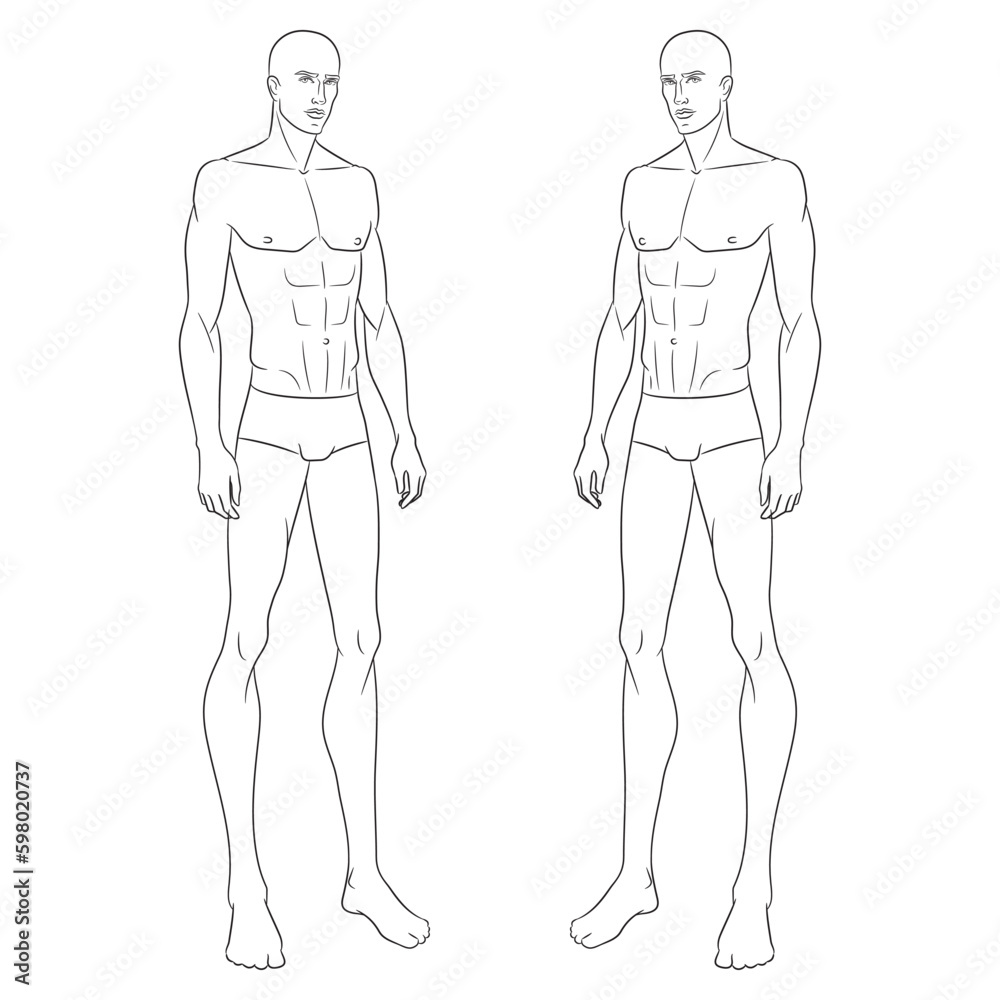
Are you an aspiring illustrator, a seasoned comic artist, or perhaps a character designer looking to elevate your creations? Do you ever find yourself staring at a blank canvas, struggling to capture that perfect dynamic pose or a believable human form? If so, you’re not alone! The human body, in all its glorious complexity, can be a formidable subject. But what if there was a secret weapon, a powerful tool to simplify this challenge and unleash your artistic vision? Enter the posing body template for illustration – your ultimate guide to bringing characters to life with confidence and flair!
This isn’t just about tracing; it’s about understanding form, movement, and emotion. A well-utilized posing body template can be the cornerstone of your artistic journey, transforming frustration into creative flow. Imagine effortlessly conveying a character’s personality through their stance, their energy radiating from the page. That’s the transformative power we’re about to explore.
The Unbeatable Advantage of Posing Body Templates
Let’s be honest, drawing anatomy from scratch can be daunting. Muscles, bones, proportions – it’s a lot to master. While dedicated study of anatomy is crucial for any serious artist, a posing body template for illustration offers an immediate and incredibly effective shortcut. It provides a solid foundation, a pre-defined structure that you can then build upon, adapt, and imbue with your unique artistic voice.
Think of it like this: a sculptor doesn’t start by carving every grain of marble. They often begin with a rough armature, a skeletal framework, and then meticulously refine it. A posing body template serves a similar purpose for illustrators. It’s your armature, allowing you to focus on the expressive elements of your drawing rather than getting bogged down in the minutiae of anatomical accuracy from the outset.
What Exactly is a Posing Body Template for Illustration?
At its core, a posing body template for illustration is a simplified, often stylized, representation of the human figure in a specific pose. These templates can come in various forms:
- Stick Figures: The most basic form, focusing purely on the skeletal structure and major joint points. Excellent for quickly blocking out movement and gesture.
- Mannequin Figures: More developed than stick figures, these templates feature basic volumetric shapes (cylinders, spheres, boxes) representing limbs and torso. They offer a better understanding of form and volume.
- Wireframes: Often seen in 3D modeling software, these are digital representations of a skeletal structure with connected points. They are incredibly versatile for exploring complex poses and camera angles.
- Silhouettes: These templates focus on the outer contour of the body, highlighting the overall shape and flow of a pose. Great for conveying dynamism and readability.
- Pre-posed 3D Models: Digital models that can be manipulated and rotated in 3D software, allowing for an unparalleled level of control over pose, camera, and lighting.
The beauty of a posing body template for illustration lies in its adaptability. It’s not meant to be a rigid, unchangeable blueprint. Instead, it’s a springboard for your creativity. You can use it as a reference, trace over it, or even deconstruct it to understand how the pose is constructed.
Why Every Illustrator Needs a Posing Body Template
The benefits of incorporating a posing body template for illustration into your workflow are numerous and impactful. Let’s delve into some of the most significant advantages:
1. Mastering Dynamic Poses with Ease
One of the biggest hurdles for illustrators is creating poses that feel alive and engaging. Static, stiff figures can instantly drain the energy from a piece. Posing body templates, especially those designed for dynamic action, provide clear visual cues for weight distribution, foreshortening, and the flow of movement. By studying how a template Fashion fall winter embrace the exquisite captures a leap, a punch, or a dramatic turn, you learn to translate those principles into your own drawings. This is where the power of a posing body template for illustration truly shines.
2. Achieving Accurate Proportions and Anatomy (Without the Headache!)
While templates simplify anatomy, they don’t completely abandon it. Many well-designed templates adhere to fundamental proportion rules, offering a reliable guide for your figures. This is invaluable for beginners who are still developing their understanding of human anatomy. Even experienced artists can benefit from a quick check to ensure their proportions are on point, especially when working with unusual or extreme poses.
3. Accelerating Your Workflow and Boosting Productivity
Time is a precious commodity for any artist. Constantly redrawing basic body structures can be a significant time sink. A posing body template for illustration allows you to quickly establish a pose, freeing up your mental energy and drawing time for more crucial elements like character expression, costume design, and background details. This efficiency boost can be a game-changer for meeting deadlines and increasing your overall output.
4. Enhancing Character Expression and Storytelling
A character’s pose is a powerful form of non-verbal communication. A slumped posture might convey sadness, while an upright, confident stance speaks of determination. By using posing body templates, you can explore a wider range of emotional expressions through your characters’ physicality. You can experiment with different poses to see which best tells the story you want to convey, making your illustrations more impactful and resonant.
5. Overcoming Artist’s Block and Sparking Inspiration
We all experience creative blocks. Staring at a blank page can be incredibly frustrating. A posing body template for illustration can be an excellent tool to break through these moments. Simply browsing through a collection of poses can spark new ideas and inspire you to draw something you might not have considered otherwise. It provides a starting point, a visual prompt that can reignite your creative fire.
6. Building a Strong Foundation for Advanced Techniques
While templates offer a shortcut, they are also a fantastic learning tool. By tracing and analyzing the underlying structure of a posed template, you begin to internalize how different body parts connect and move. This knowledge, gained through practical application, will gradually build your understanding of anatomy and make you less reliant on templates over time. It’s a stepping stone to true artistic mastery.
Types of Posing Body Templates for Illustration and How to Use Them
The world of posing body templates is diverse, offering solutions for every artistic need. Let’s explore some popular types and how you can best utilize them:
H3: The Versatile Stick Figure Template
H4: Best for Gesture and Quick Blocking
Stick figures are the simplest form of posing body template. They consist of lines representing the spine, limbs, and head.
- How to Use:
- Gesture Drawing: Quickly sketch out the primary flow and energy of a pose. Focus on the line of action – the imaginary line that represents the dominant movement in the pose.
- Basic Proportion Check: Ensure the overall length of limbs and torso are roughly correct.
- Movement Studies: Experiment with various dynamic poses without getting bogged down in detail.
H3: The Foundational Mannequin Template
H4: Understanding Volume and Form
Mannequin templates are more developed, using simple geometric shapes (cylinders, spheres, boxes) to represent the body’s mass.
- How to Use:
- Volume and Weight: Understand how weight is distributed and how forms occupy space.
- Basic Anatomy Construction: See how simple shapes can be combined to form more complex anatomical structures.
- Adding Muscle and Detail: Use the mannequin as a guide to sculpt your own musculature and anatomical details.
H3: The Digital Marvel: 3D Posing Software and Models
H4: Unparalleled Control and Realism
For those working digitally, 3D posing software and models are revolutionary. Programs like Clip Studio Paint, Blender, and dedicated 3D model apps offer fully articulated figures that can be posed in virtually any position.
- How to Use:
- Precise Posing: Manipulate individual joints to achieve incredibly specific and complex poses.
- Camera and Lighting: Set up virtual cameras and lighting to see how your pose looks from different angles and under various lighting conditions.
- Reference for Complex Scenes: Essential for creating dynamic action sequences, group shots, or scenes with challenging perspectives.
- Customization: Many 3D models can be adjusted for body type, gender, and even basic facial features.
H3: The Elegant Silhouette Template
H4: Conveying Impact and Readability
Silhouette templates focus on the outer contour of the body, emphasizing the overall shape and flow.
- How to Use:
- Readability in Comics: Ensure your characters are easily recognizable and their actions are clear, even at a distance.
- Dynamic Storytelling: Use silhouettes to convey powerful emotions or dramatic moments.
- Compositional Studies: Experiment with how different poses interact within a frame.
Finding and Utilizing the Perfect Posing Body Template for Illustration
The internet is a treasure trove of posing body templates. Here’s how to find and effectively integrate them into your artistic process:
H3: Where to Find Amazing Posing Body Templates
- Online Art Communities: Websites like DeviantArt, ArtStation, and Pinterest are brimming with free and paid posing templates created by fellow artists. Search for terms like "pose reference," "figure drawing template," or "character pose pack."
- Dedicated Pose Reference Websites: Many websites specialize in providing extensive libraries of pose references, often categorized by action, emotion, or body type.
- 3D Posing Software: As mentioned, software like Clip Studio Paint, Procreate (with specific brushes/assets), and free options like Blender offer built-in 3D models or allow you to import them.
- Stock Photo Sites: While not strictly templates, dynamic stock photos of models in various poses can serve as excellent references.
- Books on Figure Drawing and Anatomy: Many excellent art books contain plates and diagrams of the human figure in different poses, which can be adapted into templates.
H3: Tips for Maximizing Your Posing Body Template Use
- Don’t Just Trace: While tracing can be a starting point, try to understand the underlying structure. Redraw the pose from memory or with minimal reference.
- Adapt and Modify: Templates are a starting point, not an end-all. Change the pose to fit your character’s personality and the needs of your illustration. Add your own unique flair!
- Combine and Composite: Don’t be afraid to combine elements from different templates or to use a template as a base for a more complex pose.
- Study the Anatomy Beneath: Use the template as an opportunity to learn. Research the muscles and bones that create the pose.
- Consider Your Style: Choose templates that align with your artistic style. If you draw in a cartoony style, a hyper-realistic 3D model might not be the best fit, and vice-versa.
- Experiment with Foreshortening: Posing templates are excellent for practicing and understanding foreshortening, a crucial skill for creating dynamic and believable figures.
The Joyful Journey of Artistic Growth with Posing Body Templates
Incorporating a posing body template for illustration into your artistic toolkit is more than just a practical tip; it’s an invitation to a more enjoyable and rewarding creative process. It’s about empowering yourself to tell stories, to create characters that leap off the page, and to express your unique artistic vision with newfound confidence.
Think of the festive spirit of bringing characters to life, each with their own personality and story to tell. A well-chosen pose can be the spark that ignites that narrative. Whether you’re a beginner just starting your artistic adventure or a seasoned professional looking to refine your skills, the posing body template for illustration is a powerful ally. It’s a tool that respects your time, amplifies your creativity, and ultimately, helps you achieve your artistic dreams. So, embrace this fantastic resource, experiment, and most importantly, have fun bringing your incredible characters to life!
Frequently Asked Questions About Posing Body Templates for Illustration
Q1: Are posing body templates cheating for illustrators?
A1: Absolutely not! Posing body templates are powerful tools for learning, efficiency, and inspiration. They help artists understand form, proportion, and dynamic movement, ultimately leading to stronger, more expressive artwork.
Q2: How can I use a posing body template without making my art look generic?
A2: The key is to use templates as a foundation. Adapt, modify, and add your unique style, character details, and emotional nuances. Think of it as a reference, not a rigid rulebook.
Q3: What’s the difference between a stick figure and a mannequin template?
A3: Stick figures focus on the gesture and line of action, while mannequin templates use simple geometric shapes to represent volume and form, offering a better understanding of the body’s mass.
Q4: Are there good free posing body template resources available?
A4: Yes! Many online art communities like DeviantArt and Pinterest, as well as free 3D software like Blender, offer excellent free posing resources.
Q5: How often should I use a posing body template?
A5: Use them as often as you find them helpful! They are particularly useful for practicing dynamic poses, overcoming artist’s block, or when working on complex scenes. As your skills grow, you might find yourself relying on them less for basic poses but still using them for inspiration or challenging angles.