Unlock the Magic of Dynamic Cartoon Poses: Your Ultimate Guide
Ever admired those vibrant, expressive cartoon characters that leap off the page, their personalities practically radiating through their every stance and gesture? The secret to their captivating appeal often lies in the art of posing. Mastering how to do poses in cartoon illustration is not just about drawing a character standing still; it’s about breathing life, emotion, and narrative into your artwork. Whether you’re a budding artist dreaming of creating your own animated shorts or a seasoned illustrator looking to elevate your character designs, understanding the fundamentals of cartoon posing is absolutely crucial. This guide will equip you with the knowledge and techniques to create poses that are not only visually appealing but also tell a compelling story.
The Foundation of Expressive Poses: Understanding the Basics
Before we dive into the nitty-gritty of creating dynamic poses, let’s establish a solid foundation. Cartoon illustration, while often simplified, still relies on fundamental principles of anatomy and movement. The key is to exaggerate and stylize these principles to achieve that signature cartoon feel.
Anatomy Simplified: The Building Blocks of Movement
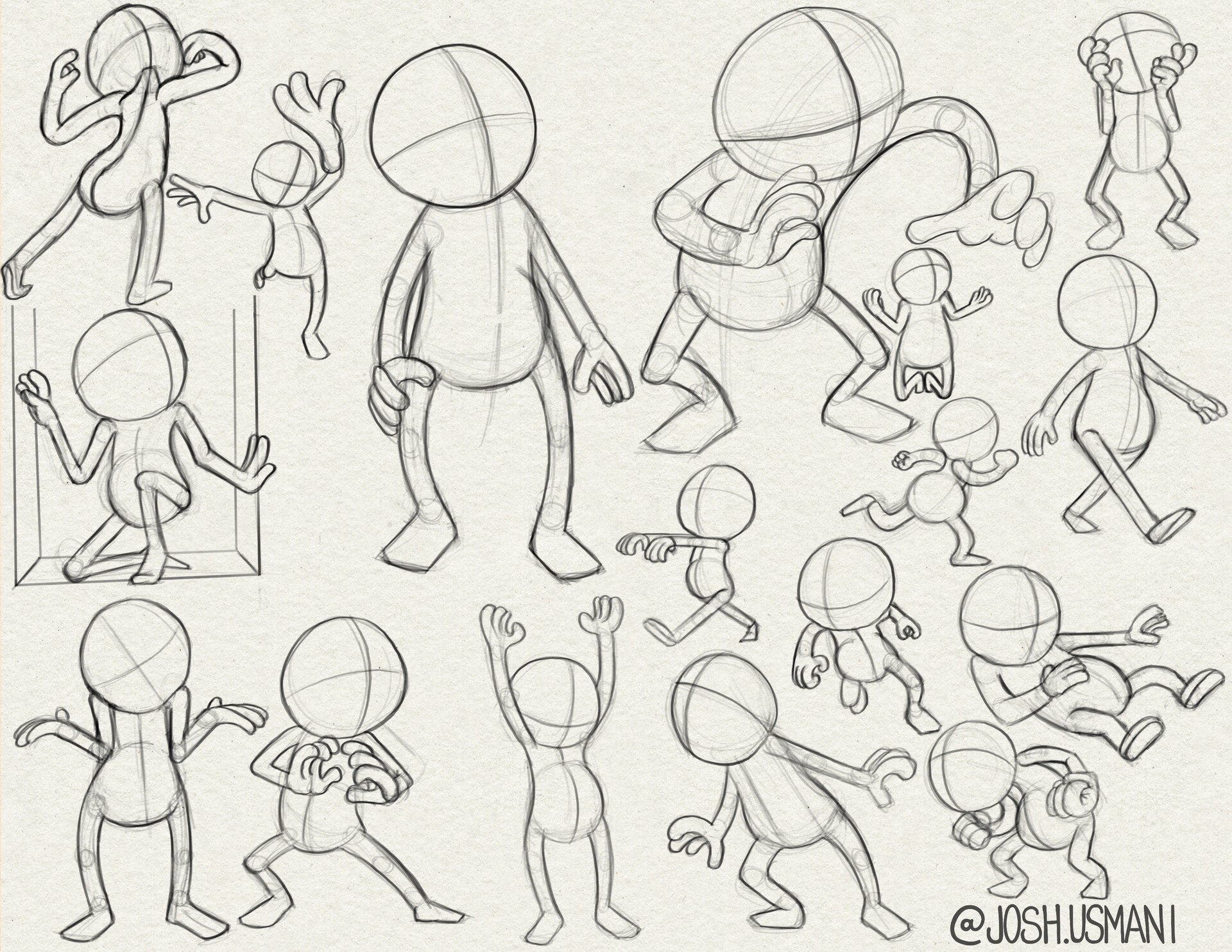
While you don’t need to be a medical expert, a basic understanding of human (or creature!) anatomy is invaluable. Think of your character as a collection of simple shapes: spheres for heads and joints, cylinders for limbs, and boxes for torsos.
- The Torso: This is the central hub. It can be straight, twisted, bent, or tilted. The torso’s position dictates much of the character’s overall posture and energy.
- The Limbs: Arms and legs are extensions of the torso. They can be bent at the elbows and knees, extended, or positioned in countless ways to convey action and emotion.
- The Head: The head is where a lot of emotion is conveyed. Its tilt, angle, and the direction of the gaze are powerful tools for storytelling.
- The Spine: Even in simplified cartoon anatomy, the spine has a natural curve. Understanding this curve helps create more believable and fluid movement.
The Power of the Silhouette: Readability in Poses
One of the most critical aspects of effective cartoon posing is creating strong, readable silhouettes. A silhouette is the outline of your character. If you can tell what your character is doing and even their general mood just by looking at their outline, you’ve achieved a great silhouette.
- Distinct Shapes: Ensure your character’s pose creates a unique and recognizable shape. Avoid poses where limbs overlap too much or blend into the torso, making them difficult to decipher.
- Action Lines: Think about the flow of the pose. Are there clear lines of action that guide the viewer’s eye? These lines can be implied by the curve of the spine, the direction of a limb, or the sweep of a cape.
- Clarity Over Complexity: Sometimes, simpler poses with clear silhouettes are more effective than overly complex ones that can become muddled.
Exaggeration and Stylization: The Cartoonist’s Palette
This is where the magic of cartooning truly shines! Unlike realistic illustration, cartoon poses allow for significant exaggeration and stylization to amplify emotion and action.
- Emotional Amplification: If a character is happy, their pose might be more open, with limbs extended and a lifted chest. If they’re sad, their pose might be more slumped and withdrawn. Exaggerate these emotional cues.
- Action Intensification: A character jumping might have their legs bent much further than in reality, their arms flung back for momentum. A character running might have their limbs stretched to their absolute limits.
- Personality Infusion: A shy character might adopt a more closed-off pose, while a confident character might stand tall with their chest out. Poses are a direct reflection of personality.
Essential Posing Techniques for Captivating Cartoons
Now that we have a grasp of the fundamentals, let’s explore specific techniques to bring your cartoon characters to life through their poses.
H3: Understanding the Center of Gravity and Balance
Every pose, no matter how outlandish, needs to feel grounded (or intentionally unbalanced!). The center of gravity is the imaginary point where an object’s weight is concentrated. In character posing, understanding this helps create believable stances.
- Finding the Balance Point: For a standing character, the center of gravity is usually around the pelvis. If this point is directly over the base of support (the feet), the character is balanced.
- Creating Dynamic Balance: To make a pose more interesting, you can shift the center of gravity off-center. This often requires counterbalancing with other parts of the body. For example, if a character leans forward, their opposite leg might extend back to maintain balance.
- Weight Distribution: Show where the character’s weight is leaning. This can be indicated by the bend of a knee, the angle of the hips, or the placement of the feet.
H3: The Art of Gesture Drawing for Poses
Gesture drawing is a rapid sketching technique that focuses on capturing the essence of movement and form, rather than precise detail. It’s an incredibly powerful tool for developing dynamic cartoon poses.
- Focus on Flow: Don’t worry about drawing perfect lines or anatomy. Instead, focus on the overall flow and energy of the pose. Use quick, sweeping lines to capture the main movement.
- Action Lines and Curves: Identify the primary action line of the pose – the dominant curve or line that suggests movement. This could be the curve of the spine, the arc of an arm, or the trajectory of a jump.
- Simplifying Forms: Break down complex forms into simple shapes. Think of the torso as a bean, the limbs as tubes, and the head as a circle.
- Practice, Practice, Practice: The more you gesture draw, the better you’ll become at quickly capturing dynamic poses. Dedicate time to sketching from life, photos, or even other cartoons.
H3: Conveying Emotion Through Poses
Emotion is the lifeblood of compelling characters, and poses are a primary vehicle for expressing it.
- Happy and Excited: Open body language, extended limbs, lifted head, smiling face, energetic stance. Think of a character jumping for joy or celebrating a victory.
- Sad and Dejected: Slumped shoulders, lowered head, withdrawn limbs, hunched posture. Imagine a character who has just lost a game or received bad news.
- Angry and Frustrated: Tensed muscles, clenched fists, forward-leaning posture, sharp angles. Picture a character ready to confront someone or struggling with a difficult task.
- Fearful and Anxious: Cowering posture, wide eyes, hunched shoulders, hands covering the face or body. Think of a character hiding from something or anticipating danger.
- Curious and Thoughtful: Head tilted, one hand on chin, leaning forward slightly, focused gaze. This pose suggests contemplation or investigation.
H3: Posing for Action and Narrative
Every pose should serve a purpose. Is your character about to leap into action? Are they in the middle of a struggle? Are they reacting to something?
- Anticipation: Before a big action, characters often show a moment of anticipation. This might involve coiling their body, tensing their muscles, or taking a deep breath.
- Impact: When an action occurs, the pose should reflect the force and energy of that moment. This could be a powerful punch, a dramatic fall, or a sudden stop.
- Reaction: How does your character respond to events? Their pose will show their surprise, pain, relief, or determination.
- Storytelling Through Stance: Even a seemingly simple pose can tell a story. A character standing with their back to the viewer might convey mystery or defiance. A character looking over their shoulder could suggest suspicion or regret.
H3: Using Reference and Inspiration Wisely
While cartooning allows for exaggeration, Affordable designer boots for women unlocking chic style without breaking the bank it’s still beneficial to use references.
- Life Drawing: Observing how real people move and hold themselves is invaluable. Even if you simplify it later, understanding the underlying mechanics is key.
- Photography: Photos of people in various actions and emotions can be excellent references. Look for dynamic poses and interesting angles.
- Other Cartoons and Animation: Study the work of animators and cartoonists you admire. Analyze how they pose their characters to convey specific emotions and actions.
- Mirrors: Use a mirror to observe your own body language and facial expressions. This can be a great way to understand how emotions manifest physically.
Practical Steps to Master Cartoon Posing
Let’s get down to the practical application of these principles.
H4: Building Your Posing Toolkit
- Stick Figures: Start with simple stick figures to block out the basic pose. Focus on the action line, joint placement, and overall flow.
- Limb Thickness and Weight: Once the stick figure is established, add thickness to the limbs and torso. Think about how the weight of the character is distributed.
- Adding Volume and Form: Build upon the basic shapes with more organic forms. Consider the musculature (even if simplified) and the curves of the body.
- Facial Expressions: Don’t forget the face! The expression should complement the pose and enhance the overall emotion.
- Clothing and Accessories: How does clothing drape and fold around the posed body? This adds another layer of realism and dynamism.
H4: Common Cartoon Posing Pitfalls to Avoid
- The "T-Pose": A character standing straight with arms out to the sides is often stiff and uninteresting. Avoid this unless it’s for a specific, deliberate effect.
- Lack of Balance: Poses that look like they would topple over without any explanation can break the illusion.
- Stiff Joints: Avoid drawing limbs as straight, rigid tubes. Always add a slight bend to elbows, knees, and even shoulders to make them feel more natural.
- Mismatched Emotion and Pose: A character with a terrified expression but a confident, upright pose will feel jarring. Ensure consistency.
- Overly Complex Poses: While dynamism is good, sometimes too much can lead to a confusing or illegible pose. Simplicity can be powerful.
H4: Developing Your Unique Posing Style
As you practice, you’ll naturally develop your own preferences and strengths in posing.
- Experimentation: Don’t be afraid to try new things and push the boundaries of what you think is possible.
- Character Archetypes: Consider common character archetypes (hero, villain, comic relief) and how their typical poses might differ.
- Story Context: Always think about the story your character is in. The pose should reflect their current situation and personality.
The Joyful Journey of Posing in Cartoon Illustration
Mastering how to do poses in cartoon illustration is a continuous and rewarding journey. It’s about observing, experimenting, and infusing your characters with personality and life. With practice and a keen eye for detail, you’ll find yourself creating poses that are not only visually stunning but also deeply engaging. Remember, every line you draw contributes to the story your character is telling. So, embrace the exaggeration, celebrate the expressiveness, and have an absolute blast bringing your cartoon creations to life!
Frequently Asked Questions About Cartoon Posing
Q1: How important is anatomy when drawing cartoon poses?
While cartoon anatomy is simplified, a basic understanding of how the body moves and balances is crucial for creating believable and dynamic poses. Exaggerating these fundamentals is key.
Q2: What is a silhouette, and why is it important for cartoon poses?
A silhouette is the outline of your character. A strong, readable silhouette ensures that your character’s pose is clear and understandable at a glance, even without internal details.
Q3: How can I make my cartoon poses more expressive?
Exaggerate emotional cues through body language. Happy characters might have open, extended poses, while sad characters might be more slumped and withdrawn.
Q4: Is it okay to use reference photos for cartoon poses?
Absolutely! Reference photos are invaluable for understanding movement, balance, and emotion. You can then stylize and exaggerate these references for your cartoon style.
Q5: What’s the best way to practice cartoon posing?
Gesture drawing is an excellent method for quickly capturing the essence of movement. Practice sketching from life, photos, and other artwork to build your posing vocabulary.