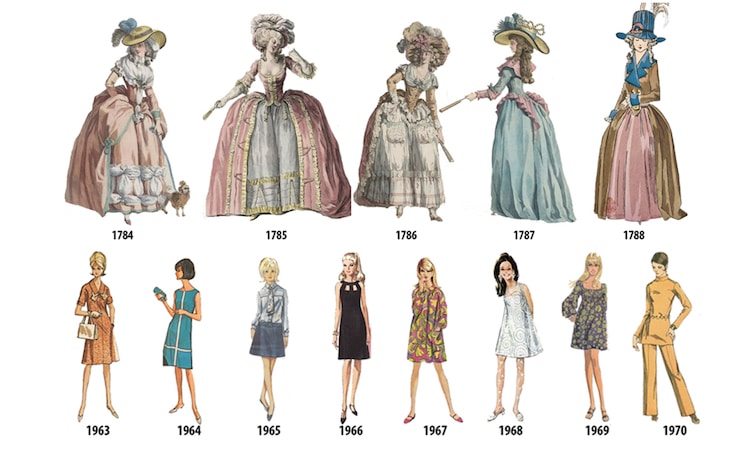
The clothes we wear tell a story, not just about our personal style, but about the eras in which we live. From the restrictive corsets of the Victorian age to the rebellious flair of the 1960s, historical fashion trends by decade offer a fascinating glimpse into the societal shifts, technological advancements, and cultural movements that have shaped our world. Join us on a dazzling journey through time as we explore the iconic looks and enduring influences of fashion across the 20th century and beyond. Get ready to be inspired by the evolution of style!
H3: The Roaring Twenties: Flappers, Freedom, and a Dash of Daring
The 1920s, often dubbed the "Roaring Twenties," was a period of unprecedented social change and artistic explosion, and fashion was at the forefront of this revolution. The aftermath of World War I brought a desire for liberation, particularly for women, and this sentiment was beautifully reflected in their attire.
H4: The Silhouette of Liberation
The most striking change was the shift away from the constricting S-bend silhouette of the previous era. Hemlines rose dramatically, reaching the knee or even slightly above, a scandalous move that symbolized newfound freedom. The waistline dropped to the hips, creating a more boyish, androgynous figure that was celebrated. This relaxed silhouette allowed for greater movement and comfort, a stark contrast to the tightly bound fashions of the past.
H4: The Iconic Flapper Dress
The flapper dress became the quintessential symbol of 1920s fashion. These often sleeveless, dropped-waist dresses were adorned with intricate beading, fringe, and sequins, designed to shimmer and sway with the energetic dances of the era, like the Charleston. Fabrics like silk, chiffon, and velvet were popular, adding to the luxurious yet liberated feel.
H4: Accessories that Dazzled
Accessories played a crucial role in completing the 1920s look. Cloche hats, pulled down low over the forehead, were a must-have. Long strands of pearls, often layered, added an elegant touch. Gloves, both short and long, were worn for formal occasions, and statement jewelry, like chunky bracelets and Art Deco-inspired earrings, became increasingly popular.
H4: Menswear: A Shift Towards Casual Elegance
While women’s fashion underwent a dramatic transformation, menswear also saw subtle but significant changes. Suits remained a staple, but they became more relaxed and less formal. The three-piece suit was common, often in lighter fabrics and colors for warmer months. The fedora and the straw boater hat were popular headwear choices. The rise of sportswear also influenced men’s fashion, with knitted sweaters and plus-fours becoming fashionable for leisure activities.
H3: The Thrifty Thirties: Elegance in Austerity
The Great Depression cast a long shadow over the 1930s, and fashion, while still striving for elegance, became more practical and economical. This decade showcased remarkable ingenuity and resourcefulness in clothing.
H4: The Return of the Feminine Form
As the decade progressed, hemlines began to drop again, returning to mid-calf or ankle length. The silhouette became more defined, emphasizing the natural waistline and a more feminine, hourglass figure. This was partly a reaction to the boyish look of the twenties and partly a reflection of a desire for comfort and modesty during challenging times.
H4: The Rise of Hollywood Glamour
Despite the economic hardship, Hollywood played a significant role in shaping 1930s fashion. Movie Plus size fashion clothing for women online embrace your stunning style stars like Greta Garbo and Marlene Dietrich became style icons, showcasing elegant evening gowns and sophisticated daywear. Bias-cut dresses, which draped beautifully and clung to the body, were a hallmark of this era, often made from luxurious fabrics like satin and silk.
H4: Practicality and Resourcefulness
With limited budgets, women became adept at making their own clothes or repurposing existing garments. Home sewing surged, and patterns were widely available. Scarves, often in vibrant prints, were a versatile accessory used to add color and flair to simpler outfits. The use of rayon, a more affordable alternative to silk, also became widespread.
H4: Menswear: The Double-Breasted Suit and the Fedora
Menswear in the 1930s saw the popularity of the double-breasted suit, which offered a more imposing and formal silhouette. The fedora remained a ubiquitous hat. For casual wear, sports jackets and trousers became more common. The overall look was one of understated sophistication and a return to more traditional tailoring.
H3: The Forties Fashion: Utility, Uniforms, and a Touch of Optimism
World War II profoundly impacted every aspect of life, including fashion. The 1940s was a decade defined by wartime austerity, but also by a resilient spirit and a longing for normalcy.
H4: The Utility Suit and Rationing
Fabric rationing led to the development of the "utility suit" for women, a practical and often unadorned garment designed for efficiency. Skirts were typically knee-length, and trousers became increasingly popular for women working in factories. Shoulder pads became a prominent feature, creating a strong, squared-off silhouette that symbolized strength and resilience.
H4: The Glamour of the Silver Screen
Even amidst wartime restrictions, Hollywood continued to offer escapism and glamour. The iconic "New Look" by Christian Dior, though emerging at the very end of the decade, hinted at a post-war desire for femininity and opulence. Padded bras and girdles were used to achieve a more rounded, feminine silhouette.
H4: Hats and Hairstyles: Practicality Meets Panache
Hats remained essential, with smaller, more fitted styles like the pillbox hat and the tilt hat gaining popularity. Hairstyles were often practical, with victory rolls and elegant updos being common. Red lipstick and defined eyebrows were popular beauty trends, adding a touch of glamour to everyday looks.
H4: Menswear: The Uniform Influence
Menswear was heavily influenced by military uniforms. The single-breasted suit with narrower lapels became standard. The trench coat, a wartime staple, also transitioned into civilian fashion. Rationing also affected menswear, leading to simpler designs and fewer embellishments.
H3: The Fabulous Fifties: The New Look, Rock ‘n’ Roll, and a Return to Domesticity
The post-war era ushered in an age of prosperity and a renewed focus on domesticity and traditional gender roles, which was reflected in the fashion of the 1950s.
H4: Christian Dior’s Revolutionary "New Look"
The decade was truly defined by Christian Dior’s "New Look," introduced in 1947. This silhouette featured a nipped-in waist, a full, voluminous skirt that fell to mid-calf, and a rounded shoulder. It was a celebration of femininity and luxury, a stark contrast to the utilitarian styles of the war years.
H4: The Hourglass Figure and the Full Skirt
The hourglass figure was the ideal in the 1950s, achieved through corsetry and padded bras. Full, circle skirts, often worn with petticoats, were a dominant trend for daywear. Pencil skirts, hugging the hips and tapering to the knee, offered a more sophisticated and streamlined option.
H4: The Rise of Casual Wear and Youth Culture
As the decade progressed, a burgeoning youth culture began to influence fashion. The emergence of rock ‘n’ roll brought with it a more casual and rebellious style. Jeans, t-shirts, and leather jackets became popular among teenagers, laying the groundwork for future fashion revolutions.
H4: Menswear: The Suit and the Rebel
Menswear saw the continued popularity of the tailored suit, often in lighter colors and fabrics for warmer weather. However, the influence of rock ‘n’ roll was undeniable. The "greaser" look, characterized by slicked-back hair, white t-shirts, cuffed jeans, and leather jackets, became iconic.
H3: The Swinging Sixties: Revolution, Rebellion, and the Mini Skirt
The 1960s was a decade of radical change, social upheaval, and a vibrant explosion of youth culture. Fashion became a powerful tool for self-expression and rebellion.
H4: The Mini Skirt: A Symbol of Liberation
The mini skirt, popularized by Mary Quant, was arguably the most iconic fashion innovation of the 1960s. Its daringly short hemline symbolized the liberation of women and a rejection of traditional norms.
H4: Mod Fashion and Geometric Prints
The Mod movement, originating in London, heavily influenced fashion. This style was characterized by clean lines, bold geometric prints, and vibrant colors. Shift dresses, A-line silhouettes, and tailored suits in bright hues were popular.
H4: The Hippie Movement and Bohemian Flair
As the decade progressed, the counterculture movement, or "hippie" movement, emerged, bringing with it a more bohemian and free-spirited aesthetic. Flowing maxi dresses, tie-dye prints, bell-bottom jeans, and natural fabrics became popular.
H4: Menswear: The Peacock Revolution
Menswear in the 1960s underwent a "Peacock Revolution." Suits became slimmer and more fitted, and colors and patterns became bolder. The Beatles, with their matching suits and mop-top haircuts, were major style influencers. The rise of psychedelic prints and flamboyant shirts also marked this era.
H3: The Groovy Seventies: Disco, Punk, and a Spectrum of Styles
The 1970s was a decade of diverse and often contradictory fashion trends, reflecting the changing social landscape and the emergence of distinct subcultures.
H4: Disco Fever and Glamour
The disco era brought with it a surge of glamour and extravagance. Sequined dresses, platform shoes, bell-bottom pants in shiny fabrics like satin and lamé, and bold prints were all hallmarks of disco fashion.
H4: Punk Rock and Anti-Fashion
In stark contrast to disco’s glitz, the punk rock movement embraced an anti-fashion aesthetic. Ripped clothing, safety pins, leather, tartan, and DIY elements were central to punk style, reflecting a sense of rebellion and defiance.
H4: Bohemian Chic and Natural Fibers
The bohemian style of the late 1960s continued to influence the 1970s, with a focus on natural fibers, flowing silhouettes, and earthy tones. Maxi dresses, peasant blouses, and flared jeans remained popular.
H4: Menswear: The Wide Lapel and the Leisure Suit
Menswear in the 1970s was characterized by wide lapels on suits and shirts. The leisure suit, often made of polyester in bold colors, became a controversial but popular choice for casual wear. The influence of disco also brought shimmering fabrics and tight-fitting shirts.
H3: The Electric Eighties: Power Dressing, Pop Culture, and Excess
The 1980s was a decade of economic boom, bold statements, and a celebration of excess. Fashion reflected this, with an emphasis on power, individuality, and pop culture influences.
H4: Power Dressing and the Shoulder Pad
"Power dressing" was a dominant trend, particularly for women entering the workforce. The iconic shoulder pad became ubiquitous, creating a strong, assertive silhouette. Tailored suits, often in bold colors, were essential for professional attire.
H4: Pop Culture Icons and Athleisure
Pop culture had a massive impact on 1980s fashion. Music icons like Madonna and Michael Jackson influenced trends with their distinctive styles. The rise of aerobics and fitness also led to the popularity of athleisure wear, with leggings, leotards, and tracksuits becoming everyday fashion.
H4: Bold Colors, Prints, and Accessories
The 1980s was not afraid of color. Neon hues, vibrant prints, and geometric patterns were everywhere. Large, statement jewelry, oversized belts, and brightly colored hair accessories were also popular.
H4: Menswear: The Preppy Look and the Casual Trend
Menswear saw the rise of the "preppy" look, characterized by polo shirts, khaki pants, and loafers. However, casual wear also gained prominence, with designer jeans, graphic t-shirts, and bomber jackets becoming popular. The influence of hip-hop culture also brought baggy clothing and sportswear into the mainstream.
H3: The Nineties Nirvana: Grunge, Minimalism, and the Rise of Supermodels
The 1990s offered a diverse range of styles, from the anti-fashion sentiment of grunge to the sleek minimalism that defined the latter half of the decade.
H4: Grunge: Rebellion and Anti-Fashion
Emerging from the music scene, grunge fashion was characterized by its deliberately unkempt and casual aesthetic. Flannel shirts, ripped jeans, combat boots, oversized sweaters, and band t-shirts were staples of this anti-fashion movement.
H4: Minimalism and Chic Sophistication
As the decade progressed, a shift towards minimalism took hold. Clean lines, neutral color palettes, and understated elegance became the norm. Slip dresses, tailored trousers, simple t-shirts, and monochromatic outfits epitomized this trend.
H4: Hip-Hop Influence and Streetwear
Hip-hop culture continued to exert a significant influence on fashion, with baggy jeans, oversized hoodies, athletic sneakers, and sportswear becoming mainstream. The rise of streetwear brands also began to take hold.
H4: Menswear: The Baggy Silhouette and the Casual Revolution
Menswear in the 1990s embraced a more relaxed and casual approach. Baggy jeans, oversized t-shirts, and athletic footwear were prevalent. The influence of grunge and hip-hop culture was strongly felt.
H3: The Millennium and Beyond: A Fusion of Eras and Personal Expression
The 21st century has seen an unprecedented fusion of past and present fashion trends. The digital age has democratized style, allowing for greater experimentation and personalization.
H4: The Revival of Vintage and Retro
We’ve witnessed numerous revivals of styles from previous decades, from the boho chic of the 70s to the 90s grunge aesthetic. Vintage clothing has become increasingly popular, allowing individuals to curate unique and sustainable wardrobes.
H4: The Dominance of Athleisure and Comfort
Comfort has become paramount, with athleisure wear continuing its reign. Leggings, sneakers, hoodies, and tracksuits are no longer just for the gym but are integrated into everyday fashion.
H4: The Influence of Social Media and Global Trends
Social media platforms have become powerful drivers of fashion trends, enabling rapid dissemination of styles and fostering a global fashion conversation. Influencers and online communities play a significant role in shaping what’s considered fashionable.
H4: Sustainable Fashion and Conscious Consumption
There’s a growing awareness and demand for sustainable and ethically produced fashion. Consumers are increasingly seeking out brands that prioritize environmental responsibility and fair labor practices.
Conclusion: A Tapestry of Timeless Style
Exploring historical fashion trends by decade reveals a fascinating narrative of human evolution. Each era, with its unique challenges and triumphs, has left an indelible mark on the way we dress. From the daring liberation of the 1920s to the empowered silhouettes of the 1980s and the diverse expressions of today, fashion remains a powerful form of communication and self-identity. Which decade’s fashion speaks to you the most? Share your favorite historical fashion trends in the comments below!
FAQ: Your Burning Fashion History Questions Answered
Q1: What was the most significant fashion trend of the 1920s?
A1: The most significant trend was the rise of the flapper dress and the associated shift towards a more boyish silhouette with shorter hemlines and dropped waistlines, symbolizing newfound freedom for women.
Q2: How did World War II affect fashion in the 1940s?
A2: World War II led to fabric rationing, resulting in more practical and utilitarian clothing styles for women, such as the utility suit, and a strong influence of military uniforms on menswear.
Q3: What is Christian Dior’s "New Look" and when was it introduced?
A3: Christian Dior’s "New Look," introduced in 1947, revolutionized post-war fashion with its emphasis on a nipped-in waist, full skirts, and a rounded shoulder, celebrating femininity and luxury.
Q4: What characterized the fashion of the 1960s?
A4: The 1960s were defined by the mini skirt, Mod fashion with its bold geometric prints, and the bohemian style of the hippie movement, all reflecting a spirit of rebellion and youth culture.
Q5: Is vintage fashion popular today?
A5: Yes, vintage fashion is highly popular today, reflecting a growing appreciation for past styles, sustainability, and the desire for unique personal expression.